Costa Rica onAir

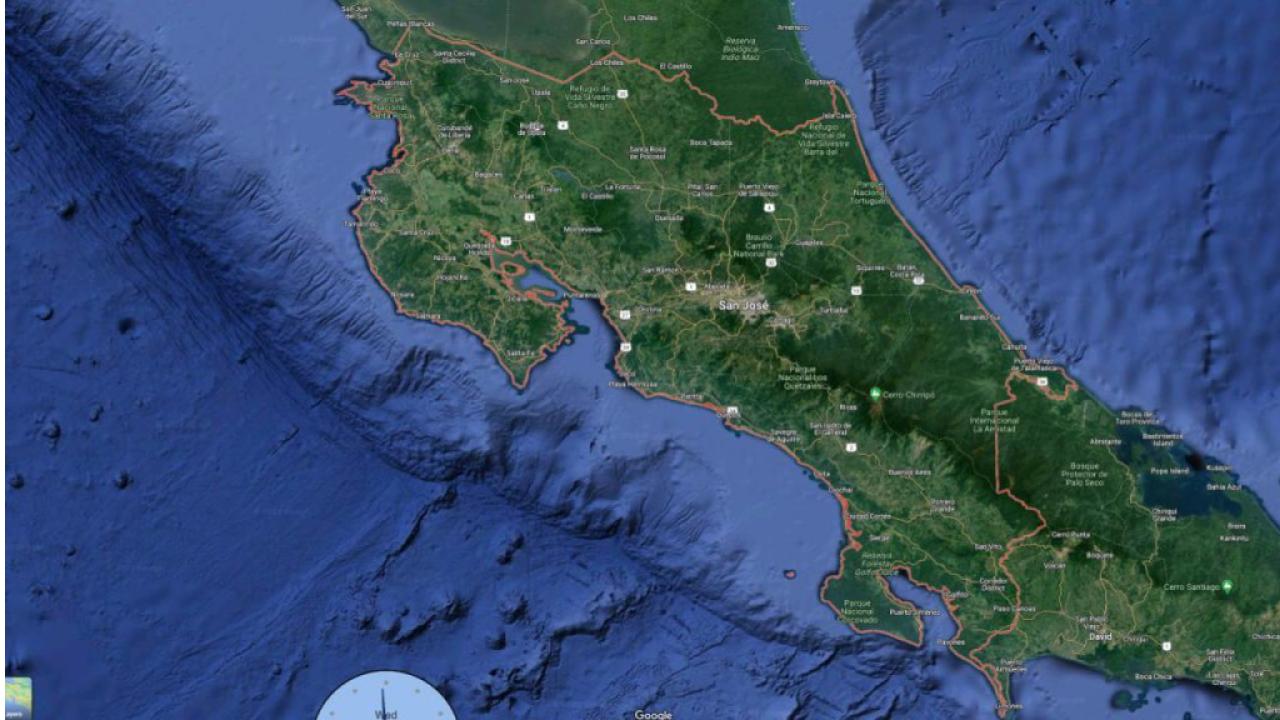
Costa Rica (UK: /ˌkɒstə ˈriːkə/, US: /ˌkoʊstə/ ( listen); Spanish: [ˈkosta ˈrika]; literally “Rich Coast”), officially the Republic of Costa Rica (Spanish: República de Costa Rica), is a country in Central America, bordered by Nicaragua to the north, the Caribbean Sea to the northeast, Panama to the southeast, the Pacific Ocean to the southwest, and maritime border with Ecuador to the south of Cocos Island. It has a population of around five million in a land area of 51,060 km2 (19,710 sq mi). An estimated 333,980 people live in the capital and largest city, San José, with around two million people in the surrounding metropolitan area.

The sovereign state is a unitary presidential constitutional republic. It is known for its long-standing and stable democracy, and for its highly educated workforce. The country spends roughly 6.9% of its budget (2016) on education, compared to a global average of 4.4%.[13] Its economy, once heavily dependent on agriculture, has diversified to include sectors such as finance, corporate services for foreign companies, pharmaceuticals, and ecotourism. Many foreign manufacturing and services companies operate in Costa Rica’s Free Trade Zones (FTZ) where they benefit from investment and tax incentives.

Source: Wikipedia

OnAir Post: Costa Rica onAir
onAir Networks

onAir Networks are human-curated, AI-assisted online networks of topical Hubs similar to real world town halls and think tanks.

We bring together professionals, administrators, students and the public to:
LEARN more about a field and advance its knowledge
DISCUSS key challenges
ENGAGE with others to co-create solutions

Together, we can build knowledge-based, trusted, collaborative online communities to create a “People’s Internet” 

  • Where onAir hub members own their content & share their profiles and projects with related hubs without being tracked, algorithmic feeds, or intrusive ads;
  • Where public posts are curated and shared by members without paywalls integrating AI summaries with their own knowledge; spotlighting the latest news, videos, and projects; moderating discussions, and hosting livestreamed interviews and events;
  • Where every person can participate and thrive

Join us & help us reclaim the web. Your voice matters onAir!

About South Korea

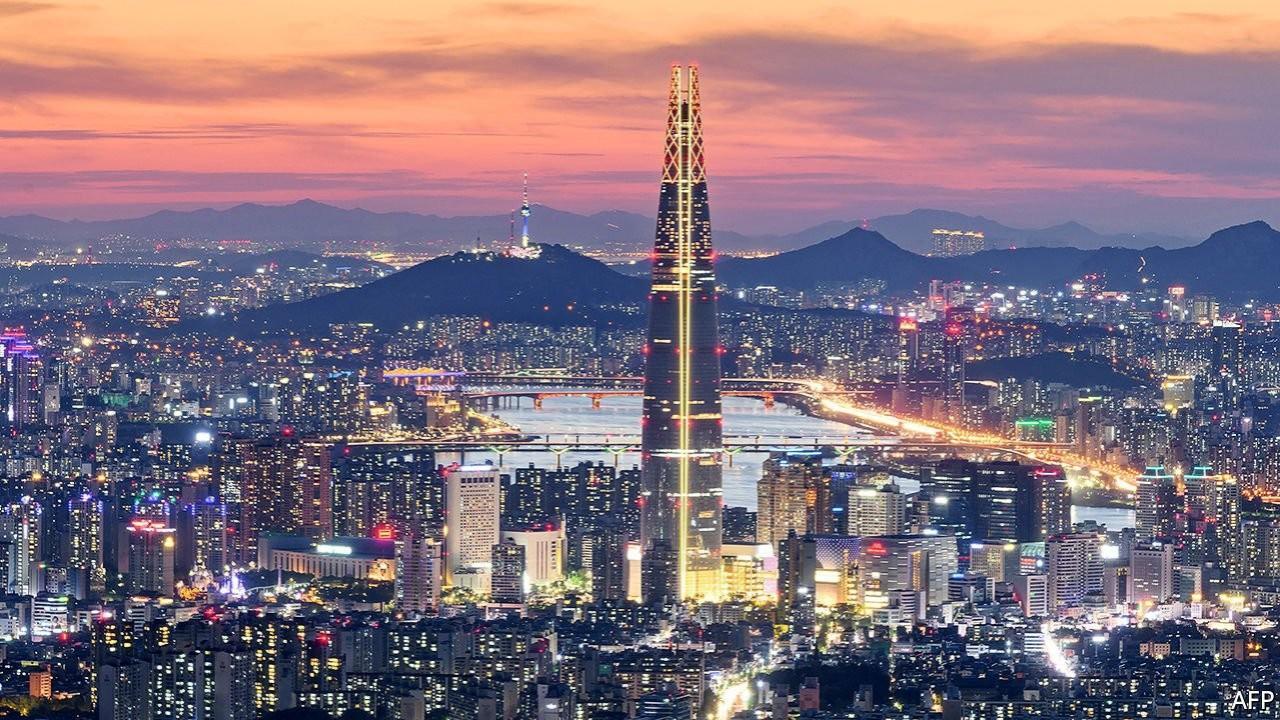
South Korea, officially the Republic of Korea (ROK), is a country in East Asia. It constitutes the southern part of the Korean Peninsula and shares a land border with North Korea. The country’s western border is formed by the Yellow Sea, while its eastern border is defined by the Sea of Japan. South Korea claims to be the sole legitimate government of the entire peninsula and adjacent islands. It has a population of 51.75 million, of which roughly half live in the Seoul Capital Area, the fourth most populous metropolitan area in the world. Other major cities include Incheon, Busan, and Daegu.

South Korea is a middle power and a highly developed country, with its economy being ranked as the world’s thirteenth-largest by nominal GDP and the fourteenth-largest by GDP (PPP). It ranks nineteenth globally by Human Development Index, and has the third-highest life expectancy in the world. In recent years, the country has been facing an aging population and the lowest fertility rate in the world. South Korea’s citizens enjoy one of the world’s fastest Internet connection speeds and the densest high-speed railway network. The country is the world’s ninth-largest exporter and ninth-largest importer. Its armed forces are ranked as one of the world’s strongest militaries, with the world’s second-largest standing army by military and paramilitary personnel. Since the 21st century, South Korea has been renowned for its globally influential pop culture, particularly in music (K-pop), TV dramas (K-dramas) and cinema, a phenomenon referred to as the Korean wave.[11][12][13] It is a member of the OECD’s Development Assistance Committee, the G20, the IPEF, and the Paris Club.

Source: Wikipedia

OnAir Post: About South Korea

About Ukraine

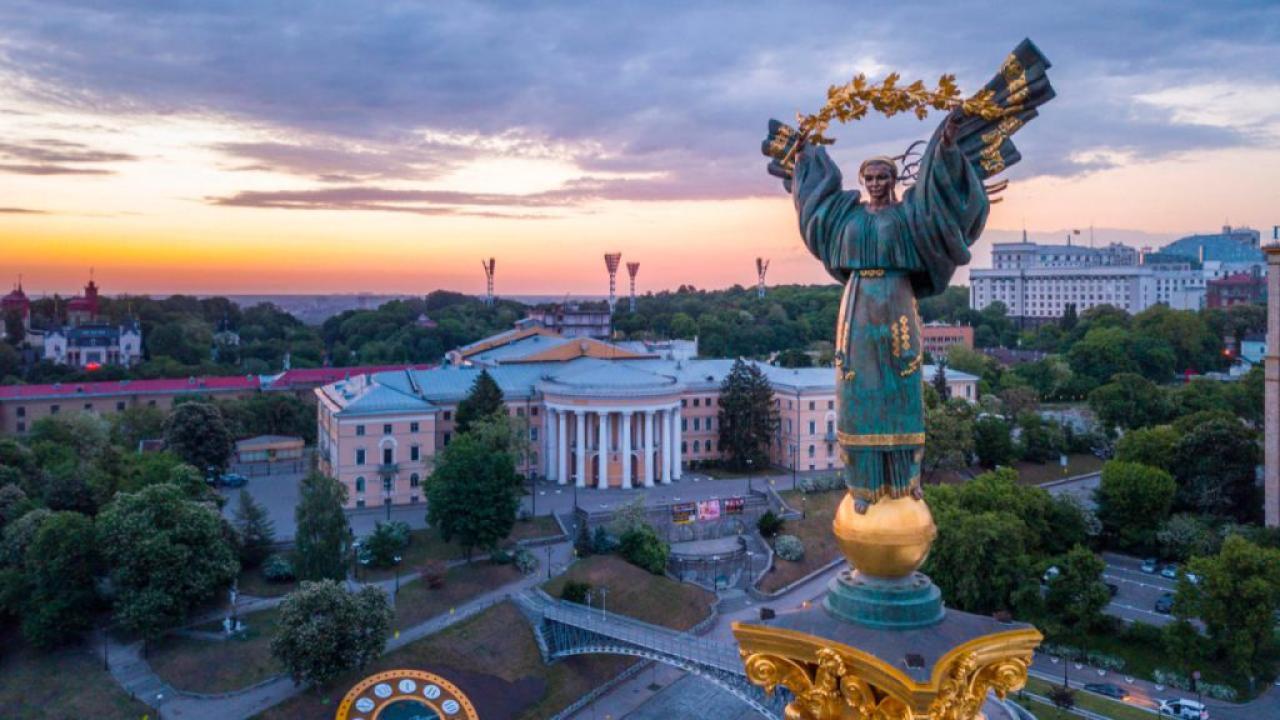
Ukraine (Ukrainian: Україна, romanized: Ukraïna, pronounced [ʊkrɐˈjinɐ] ( listen)) is a country in Eastern Europe. It is the second-largest European country after Russia, which it borders to the east and northeast. Ukraine covers approximately 600,000 square kilometres (230,000 sq mi). Prior to the ongoing Russian invasion, it was the eighth-most populous country in Europe, with a population of around 41 million people. It is also bordered by Belarus to the north; by Poland, Slovakia, and Hungary to the west; and by Romania and Moldova to the southwest; with a coastline along the Black Sea and the Sea of Azov to the south and southeast. Kyiv is the nation’s capital and largest city. Ukraine’s state language is Ukrainian; Russian is also widely spoken, especially in the east and south.

Ukraine is a unitary state with a semi-presidential system. It is a developing country, ranking 77th on the Human Development Index. Ukraine is the poorest country in Europe by nominal GDP per capita, and corruption remains a significant issue. However, due to its extensive fertile land, pre-war Ukraine was one of the largest grain exporters in the world. It is a founding member of the United Nations, as well as a member of the Council of Europe, the World Trade Organization, and the OSCE. It is in the process of joining the European Union and has submitted an application for NATO membership.

Source: Wikipedia

OnAir Post: About Ukraine

About Canada

Summary

Canada is a country in North America. Its ten provinces and three territories extend from the Atlantic Ocean to the Pacific Ocean and northward into the Arctic Ocean, covering over 9.98 million square kilometres (3.85 million square miles), making it the world’s second-largest country by total area. Its southern and western border with the United States, stretching 8,891 kilometres (5,525 mi), is the world’s longest binational land border. Canada’s capital is Ottawa, and its three largest metropolitan areas are Toronto, Montreal, and Vancouver.

A highly developed country, Canada has the 24th highest nominal per capita income globally and the sixteenth-highest ranking on the Human Development Index. Its advanced economy is the eighth-largest in the world, relying chiefly upon its abundant natural resources and well-developed international trade networks. Canada is part of several major international and intergovernmental institutions or groupings including the United Nations, NATO, the G7, the Group of Ten, the G20, the Organisation for Economic Co-operation and Development (OECD), the World Trade Organization (WTO), the Commonwealth of Nations, the Arctic Council, the Organisation internationale de la Francophonie, the Asia-Pacific Economic Cooperation forum, and the Organization of American States.

Source: Wikipedia

OnAir Post: About Canada

Skip to toolbar