United Nations

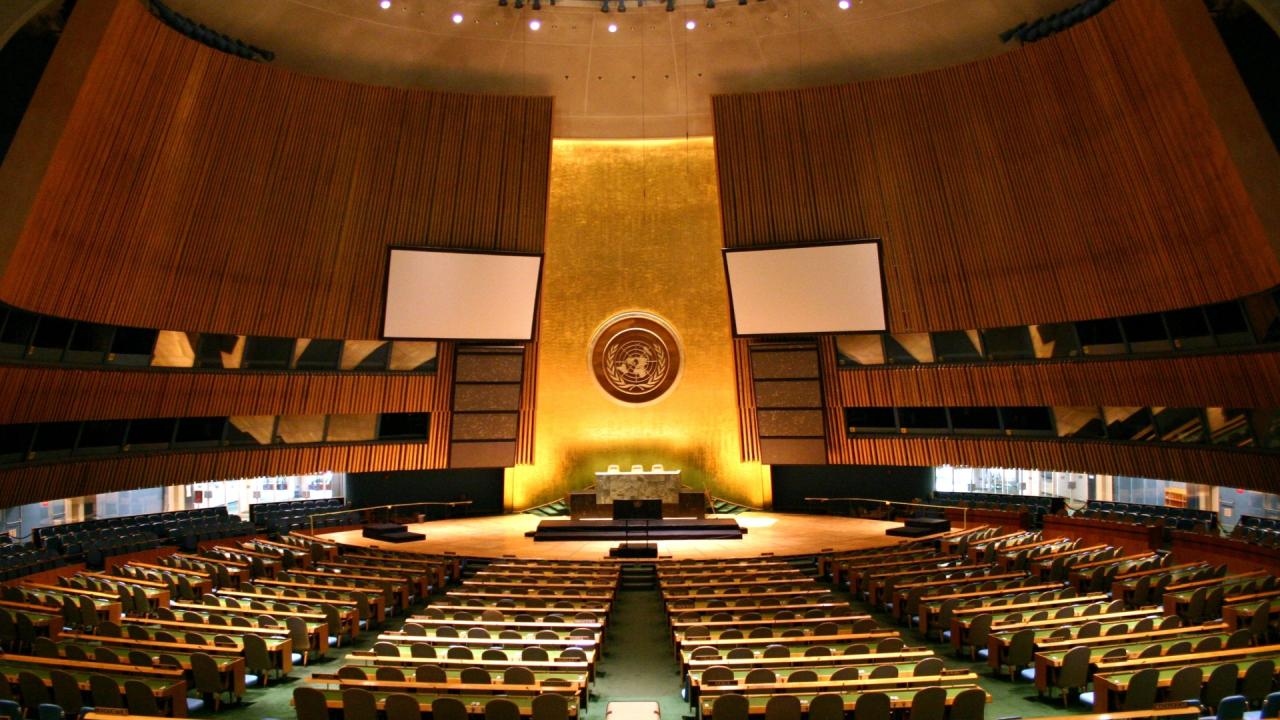
The United Nations (UN) is an intergovernmental organization whose purpose is to maintain international peace and security, develop friendly relations among nations, achieve international cooperation, and be a centre for harmonizing the actions of nations.

It is the world’s largest and most familiar international organization. The UN is headquartered on international territory in New York City, and has other main offices in Geneva, Nairobi, Vienna, and The Hague (home to the International Court of Justice).

The organization’s mission to preserve world peace was complicated in its early decades by the Cold War between the United States and Soviet Union and their respective allies. Its missions have consisted primarily of unarmed military observers and lightly armed troops with primarily monitoring, reporting and confidence-building roles. UN membership grew significantly following widespread decolonization beginning in the 1960s.

OnAir Post: United Nations
Costa Rica onAir

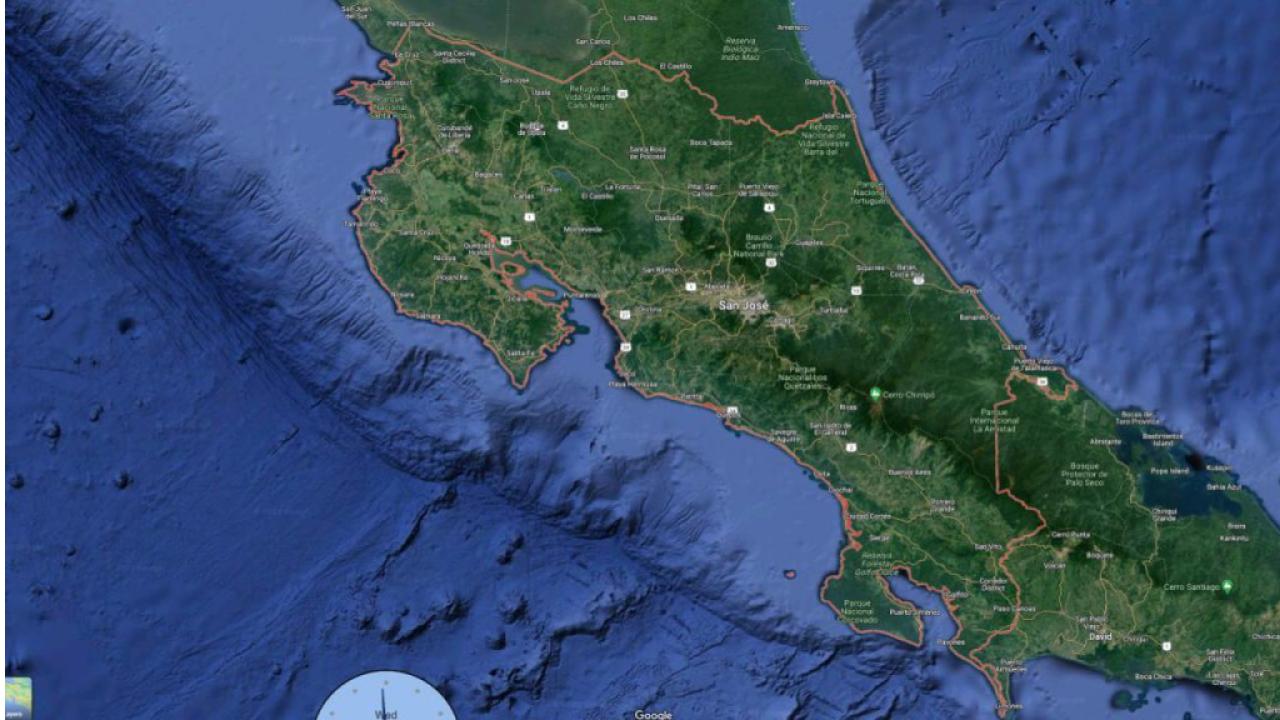
Costa Rica (UK: /ˌkɒstə ˈriːkə/, US: /ˌkoʊstə/ ( listen); Spanish: [ˈkosta ˈrika]; literally “Rich Coast”), officially the Republic of Costa Rica (Spanish: República de Costa Rica), is a country in Central America, bordered by Nicaragua to the north, the Caribbean Sea to the northeast, Panama to the southeast, the Pacific Ocean to the southwest, and maritime border with Ecuador to the south of Cocos Island. It has a population of around five million in a land area of 51,060 km2 (19,710 sq mi). An estimated 333,980 people live in the capital and largest city, San José, with around two million people in the surrounding metropolitan area.

The sovereign state is a unitary presidential constitutional republic. It is known for its long-standing and stable democracy, and for its highly educated workforce. The country spends roughly 6.9% of its budget (2016) on education, compared to a global average of 4.4%.[13] Its economy, once heavily dependent on agriculture, has diversified to include sectors such as finance, corporate services for foreign companies, pharmaceuticals, and ecotourism. Many foreign manufacturing and services companies operate in Costa Rica’s Free Trade Zones (FTZ) where they benefit from investment and tax incentives.

Source: Wikipedia

OnAir Post: Costa Rica onAir

Taiwan and Democracy

Summary

The Government of the Republic of China, is the national government of the Republic of China whose de facto territory currently consists of Taiwan, Penghu, Kinmen, Matsu and other island groups in the “free area”. Governed by the Democratic Progressive Party, the president is the head of state. The government consists of the presidency and five branches (Yuan): the Executive Yuan, Legislative Yuan, Judicial Yuan, Examination Yuan, and Control Yuan.

Originally established in 1912 in Nanking, the Government of the Republic of China relocated several times before finally moving to Taipei, Taiwan in 1949 because of its military losses in the Chinese Civil War. The government has historically been dominated by the Kuomintang under the Dang Guo authoritarian regime, but the situation has changed as Taiwan evolved into a multi-party democracy.

Source: Wikipedia

OnAir Post: Taiwan and Democracy

About India

Summary

India, officially the Republic of India (Hindi: Bhārat Gaṇarājya), is a country in South Asia. It is the seventh-largest country by area, the second-most populous country, and the most populous democracy in the world. Bounded by the Indian Ocean on the south, the Arabian Sea on the southwest, and the Bay of Bengal on the southeast, it shares land borders with Pakistan to the west; China, Nepal, and Bhutan to the north; and Bangladesh and Myanmar to the east. In the Indian Ocean, India is in the vicinity of Sri Lanka and the Maldives; its Andaman and Nicobar Islands share a maritime border with Thailand, Myanmar, and Indonesia.

India has been a federal republic since 1950, governed through a democratic parliamentary system. It is a pluralistic, multilingual and multi-ethnic society. India’s population grew from 361 million in 1951 to 1.4  billion in 2022. During the same time, its nominal per capita income increased from US$64 annually to US$1,498, and its literacy rate from 16.6% to 74%. From being a comparatively destitute country in 1951, India has become a fast-growing major economy and a hub for information technology services, with an expanding middle class. It has a space programme which includes several planned or completed extraterrestrial missions. Indian movies, music, and spiritual teachings play an increasing role in global culture. India has substantially reduced its rate of poverty, though at the cost of increasing economic inequality. India is a nuclear-weapon state, which ranks high in military expenditure.

It has disputes over Kashmir with its ...

Asia

Asia is Earth’s largest and most populous continent, located primarily in the Eastern and Northern Hemispheres. It shares the continental landmass of Eurasia with the continent of Europe, and the continental landmass of Afro-Eurasia with Africa and Europe. Asia covers an area of 44,579,000 square kilometres (17,212,000 sq mi), about 30% of Earth’s total land area and 8.7% of the Earth’s total surface area. The continent, which has long been home to the majority of the human population, was the site of many of the first civilizations. Its 4.7 billion people  constitutes roughly 60% of the world’s population.

In general terms, Asia is bounded on the east by the Pacific Ocean, on the south by the Indian Ocean, and on the north by the Arctic Ocean. The border of Asia with Europe is a historical and cultural construct, as there is no clear physical and geographical separation between them. It is somewhat arbitrary and has moved since its first conception in classical antiquity. The division of Eurasia into two continents reflects East–West cultural, linguistic, and ethnic differences, some of which vary on a spectrum rather than with a sharp dividing line. A commonly accepted division places Asia to the east of the Suez Canal separating it from Africa; and to the east of the Turkish Straits, the Ural Mountains and Ural River, and to the south of the Caucasus Mountains and the Caspian and Black Seas, separating it from Europe.


OnAir Post: Asia

Nations onAir

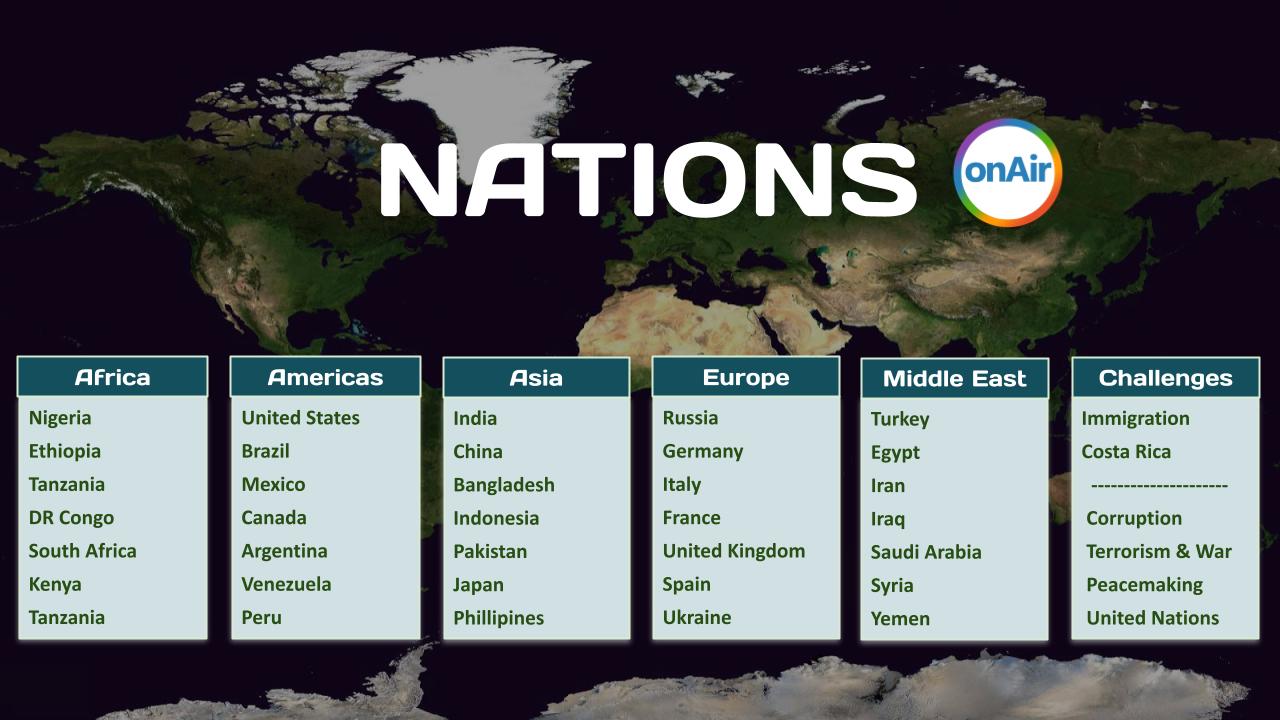
The Nations portal will have five main educational Hubs: Africa, Americas, Asia, Europe, and the Middle East..  There are many global challenge Hubs related to the Nations portal under development.

The following Nations challenge hubs have been started:

OnAir Post: Nations onAir

Skip to toolbar